Is your dog’s constant scratching starting to feel like the background music of your home? Do you find yourself wincing at the sound of yet another late-night chewing session on their paws? You’ve tried the special shampoos, you’ve switched their food, and you’re sure you haven’t seen a single flea—yet the itching persists. You’re not just a worried pet parent; you’re a detective without a clear clue.
Here’s the crucial truth every dog owner needs to know: that relentless itch is not the problem itself. It is a desperate distress signal, a symptom pointing to an underlying battle happening just beneath the skin’s surface. Treating the itch alone is like silencing a smoke alarm while the fire still burns.
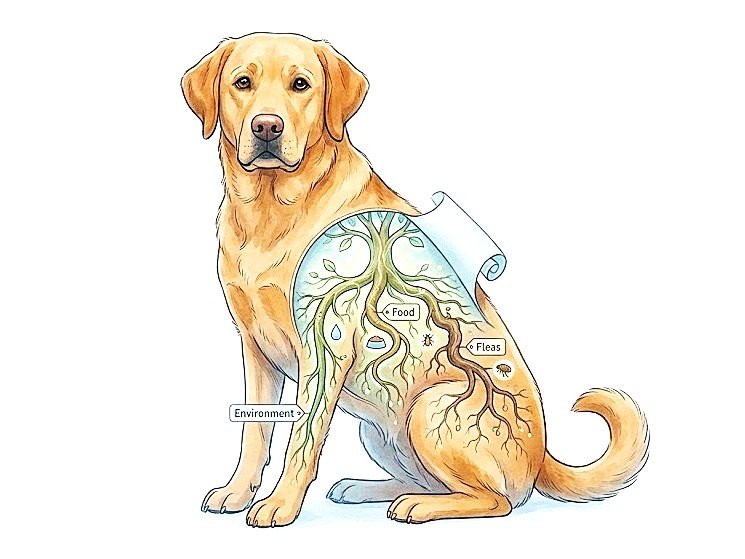
At Paw Authority, we believe in moving beyond quick fixes to find lasting solutions. This article is your guide to doing just that. We’ll move past the frustrating symptom to uncover the three main culprits behind most canine skin allergies: environmental invaders, dietary triggers, and a surprisingly common pest. Understanding these root causes is the first, most powerful step toward giving your dog genuine, long-lasting relief. Let’s turn down the volume on the itching and start listening to what your dog’s skin is really trying to tell you.
Table of Contents
The Main Culprits: What’s Really Bugging Your Dog?
When your dog is itchy, their immune system is essentially sounding a “false alarm.” It has mistakenly identified a harmless substance as a dangerous invader and launched a full-scale defense. This overreaction causes the inflammation, redness, and intense itch we see. To stop the cycle, we need to identify the trigger. The three primary suspects are environmental allergens, food sensitivities, and flea allergy dermatitis.
1. Environmental Allergies (Atopic Dermatitis)
Think of this like canine hay fever, but instead of sneezing, the reaction happens primarily on the skin. Dogs with atopic dermatitis react to microscopic particles in their everyday environment.
- Common Triggers: These include pollens from trees, grasses, and weeds; mold spores; dust mites thriving in household fabrics; and even dander from other animals.
- Key Clues: This allergy often has a seasonal pattern, flaring up in spring or fall, though it can become a year-round issue. Symptoms frequently target specific areas: you might notice your dog licking their paws raw, rubbing their face on the carpet, or getting recurrent ear infections. Reddened skin, especially on the belly, armpits, or between the toes, is another telltale sign. These allergies typically first appear when a dog is between one and three years old and may worsen over time.
2. Food Allergies & Sensitivities
While often the first guess of pet owners, true food allergies (immune responses) are less common than environmental ones. However, food-related issues, including sensitivities that don’t involve the immune system, are a significant and often overlooked cause of skin problems.
- The Usual Suspects: Contrary to popular belief, grains are a less common trigger. The most frequent offenders are actually animal proteins. The top culprits are beef, dairy, chicken, egg, and wheat. A dog can develop an allergy to a protein they have eaten regularly for years.
- Key Clues: Food-related skin issues are typically non-seasonal—the itching occurs year-round. They often involve the skin and the gut. Alongside itching, you might see chronic ear infections, recurrent skin infections, or gastrointestinal signs like frequent diarrhea, vomiting, or increased gas. Diagnosing a food allergy isn’t done with a simple blood test; it requires a strict, 8-12 week elimination diet trial using a novel protein or hydrolyzed diet prescribed by your veterinarian, with absolutely no other treats, flavored medications, or table scraps.
3. Flea Allergy Dermatitis (FAD)
This is one of the most severe and frustrating allergies because it is so easily preventable, yet profoundly uncomfortable. A dog with FAD isn’t just irritated by fleas; they are hyper-allergic to the saliva injected by a flea bite.
- The Mechanism: It takes just one or two flea bites to trigger an intense, system-wide allergic reaction that can cause severe itching for days or even weeks.
- Key Clues: The itching is intensely focused on the rear half of the body—particularly the lower back just above the tail (the “flea triangle”), the base of the tail, and the back legs. You may see scabs, hair loss, or inflamed skin in these areas. Crucially, you may never see a flea on your dog. An allergic dog will often chew, bite, and groom so obsessively that they remove the evidence. This is why consistent, year-round flea prevention for every pet in the household is non-negotiable for managing FAD.
To help you start connecting the dots, here is a quick guide to common symptoms and their likely causes:
| Symptom / Clue | Environmental Allergies | Food Allergies & Sensitivities | Flea Allergy Dermatitis (FAD) |
|---|---|---|---|
| Primary Itch Location | Paws, face, ears, underarms | Generalized, ears, rear | Lower back, tail base, thighs |
| Seasonal Pattern? | Often Yes (can be year-round) | No (Year-round) | Worse in warm, humid months |
| GI Issues (vomiting/diarrhea) | Rare | Common | No |
| Visible Fleas? | No | No | Often No (due to over-grooming) |
Understanding these distinct profiles is your first powerful tool in solving the mystery of your dog’s discomfort. In the next section, we’ll turn this knowledge into an actionable plan for relief and partnership with your veterinarian.
From Clues to Action: Your Plan for Relief
Now that you know the likely suspects, it’s time to move from detective work to a practical action plan. Managing your dog’s skin allergies is almost always a partnership between you and your veterinarian, focusing on identifying the trigger and building a multi-pronged strategy for comfort.
Step 1: Become a Home Detective (Before the Vet Visit)
Arming yourself with detailed observations will make your veterinary consultation far more productive. Start a simple log for a week or two, noting:
- The Itch: When is it worst? After walks? After meals?
- The Location: Is your dog focused on their paws, ears, or rear?
- Diet: Write down every single thing your dog eats, including treats, dental chews, and food used to give pills.
- Environment: Note pollen counts, recent lawn treatments, or new cleaning products.
- Photos: Take clear pictures of any rashes, redness, or hair loss to show your vet.
This log isn’t for diagnosis, but it provides crucial clues that can point your vet in the right direction faster.
Step 2: Partner with Your Veterinarian for a Diagnosis
A thorough veterinary exam is essential to rule out other conditions that mimic allergies, such as mites, bacterial infections, or hormonal issues. Be prepared to discuss your log in detail. Your vet’s approach will depend on the suspected culprit:
- For Flea Allergy Dermatitis (FAD), they will implement aggressive, vet-grade flea control for all pets in the home.
- For suspected environmental allergies, they may discuss allergy testing (blood or intradermal skin tests) to identify specific triggers, which can lead to long-term solutions like allergen-specific immunotherapy (“allergy shots” or oral drops).
- For suspected food allergies, they will guide you through a strict elimination diet trial. This is the only definitive way to diagnose a food allergy. It involves feeding a novel protein (like duck, venison, or kangaroo) or a hydrolyzed diet (where proteins are broken down so small they can’t trigger a reaction) for 8-12 weeks, with absolutely no other foods.
Step 3: Implement a Multi-Pronged Management Plan
Relief comes from managing both the cause and the symptoms. Your plan will likely combine several of these elements:
- For Environmental Triggers:
- Paw Wipes: Use a damp cloth or pet wipe to clean your dog’s paws, belly, and coat after every outdoor excursion to remove pollens and molds.
- Frequent Bathing: Regular baths with a soothing, hypoallergenic, or medicated shampoo (like one containing oatmeal or chlorhexidine) can physically wash allergens away and calm inflamed skin. Ask your vet for a recommendation and bathing schedule.
- Home Environment: Wash your dog’s bedding weekly in hot water, use a HEPA air filter, and vacuum frequently to reduce dust mites and indoor allergens.
- For Food Triggers:
- Commit to the Trial: The elimination diet only works with 100% strict adherence. Even one treat can invalidate weeks of effort.
- Re-challenge Phase: After symptoms resolve, your vet may have you systematically reintroduce old ingredients to confirm which one causes the reaction.
- For All Allergy-Prone Dogs:
- Skin & Coat Support: Supplements like Omega-3 fatty acids (from fish oil) have potent anti-inflammatory properties and can strengthen the skin barrier.
- Medications: Your vet may prescribe short-term medications like antihistamines, corticosteroids, or newer targeted therapies like Apoquel or Cytopoint to break the itch-scratch cycle and provide immediate comfort while long-term solutions take effect.
Managing skin allergies is a journey, not a one-time fix. By understanding the root cause and working systematically with your vet, you can dramatically reduce your dog’s discomfort and help them get back to a happy, itch-free life.
Conclusion: The Path to a Happier, Healthier Dog
While the journey through canine skin allergies can feel daunting, it ultimately leads to one place: a more comfortable, joyful life for your dog. Remember, you are not powerless in the face of their itching. By shifting your focus from the frustrating symptom to the underlying cause, you’ve already taken the most critical step. Armed with knowledge and a clear partnership with your veterinarian, you can create a targeted and effective management plan.
True relief may take time, patience, and some trial and error—whether it’s perfecting a new diet, implementing a new grooming routine, or finding the right long-term treatment. There is no single “cure,” but with consistent care and observation, most allergic dogs experience a remarkable improvement in their quality of life. The sound of contented sleep will replace the sound of constant scratching.
At Paw Authority, our goal is to empower you with the practical, trustworthy information you need to be your dog’s best advocate. For more hands-on tips, explore our guides on [Home Remedies to Soothe Your Dog’s Itchy Skin] and how to choose the right shampoo in [Bath Time Relief].
Your dedication is the key to turning down the itch and turning up the tail wags.