Training a Pomeranian can be a fun and challenging experience, particularly for first-time dog owners. Pomeranians are known for their small size, fluffy coats and lively personalities. They are intelligent and affectionate companions. However, they can be stubborn, vocal and full of energy too, which makes proper training a must from an early age. Without guidance these adorable dogs can develop habits such as excessive barking, separation anxiety or difficulty following commands.
Learning how to train a Pomeranian properly is the key to building a strong and positive relationship with your pet for first-time owners in the United States. Training is not about teaching commands, it’s about communication, trust and consistency. With appropriate training, your Pomeranian can become a well-behaved, confident, happy member of your household.
One of the most important things to remember is that Pomeranians respond best to positive reinforcement . This means rewarding good behaviour with treats, praise or playtime instead of punishment. Consistency is just as important . Mixed signals can confuse your dog and slow down progress .
In this guide, you’ll learn practical and easy Pomeranian training tips for beginners especially if you are a first time dog owner. This article will help you to start your training journey with confidence and success, from basic obedience and potty training to dealing with behavioural problems.
Understanding Pomeranian Behavior
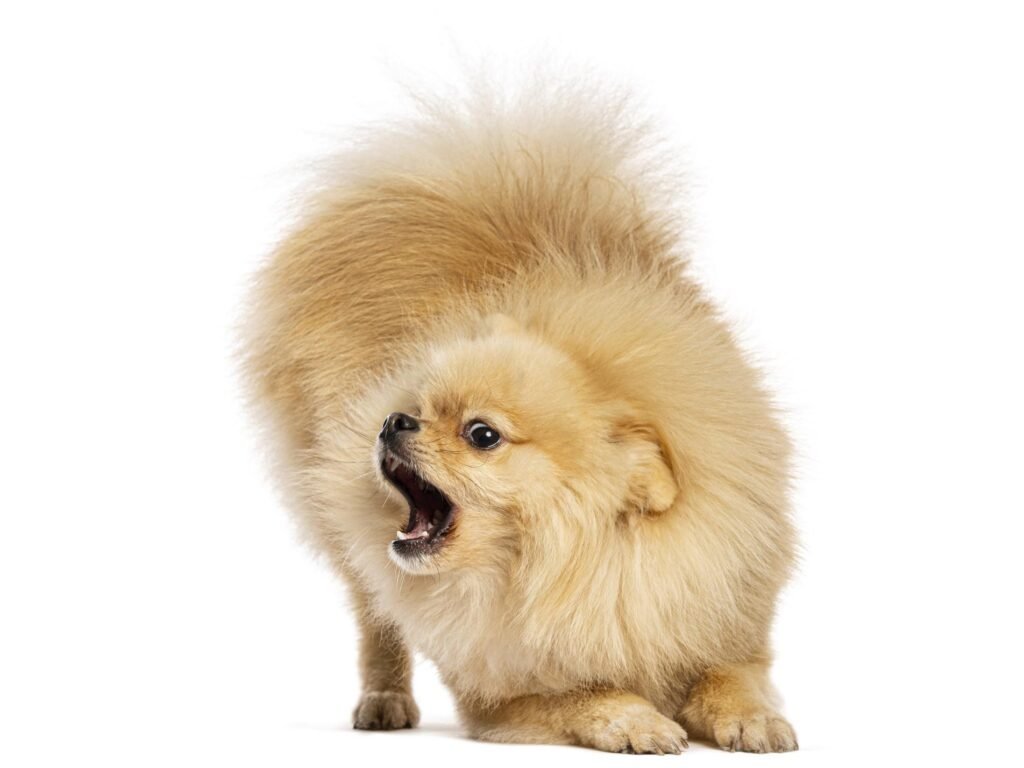
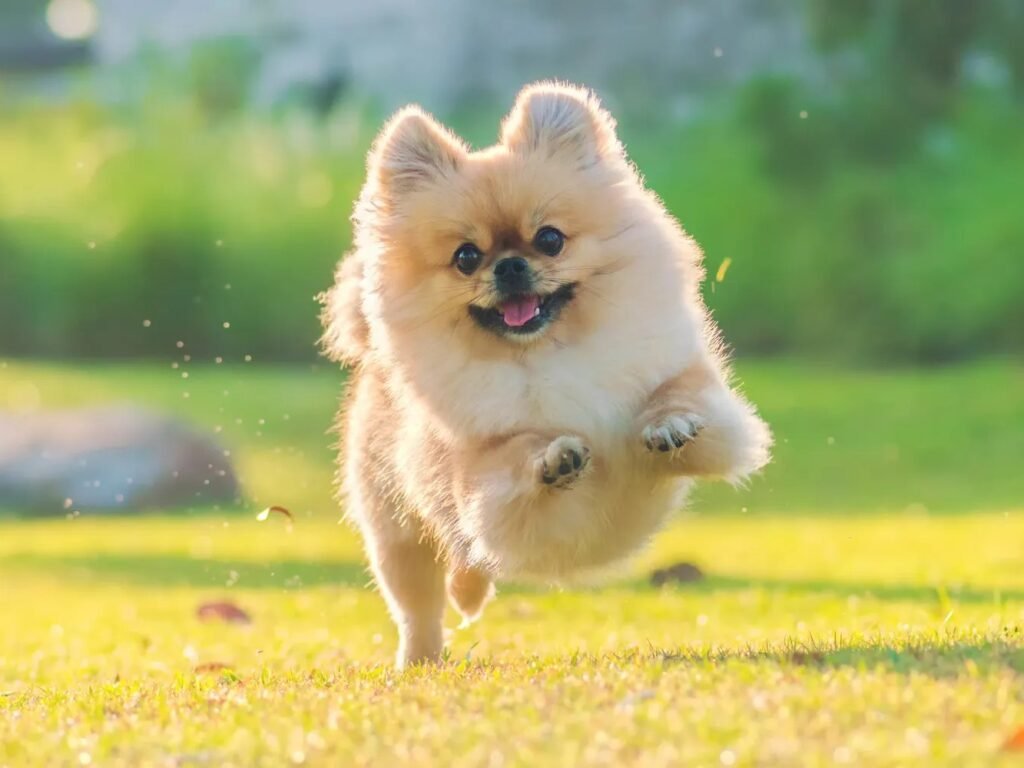
Successful training starts with understanding your Pomeranian’s behaviour. Pomeranians are little, but have big personalities. They are descended from larger Spitz-type dogs that pulled sleds, and they keep that bold, confident and sometimes stubborn nature. This blend of intelligence and independence may surprise first-time owners, but understanding their behaviour makes training much simpler.
One of the most striking features of Pomeranians is their alertness. They’re naturally alert, reacting quickly to sounds, movements or unfamiliar people. This is the reason why many Pomeranians are prone to excessive barking. Barking is a normal form of communication but too much barking can become a problem if not managed early. Your dog might bark to get your attention, to let you know something, or out of boredom. Knowing the reason for the barking is the first step in correcting it properly.
Pomeranians are also very intelligent dogs and learn commands quickly. But their brains can also make them stubborn. If they perceive that there is no consistency or structure, they may not obey commands. That’s why training consistency matters. Having clear rules and routines helps your Pomeranian understand what is expected and reduce confusion.
Another characteristic of their behaviour is their strong attachment to their owners. Pomeranians are loving and need to be around people. This makes them wonderful companions, but it can also lead to separation anxiety if they get too dependent. Separation anxiety signs include excessive barking, destructive behaviour, or restlessness when left alone. Slow training to foster independence is the key to prevent these problems.
Pomeranians are small but they have a big-dog attitude. They may be protective, territorial, or even confront larger dogs. Such behaviour arises from their confident nature and needs to be managed by means of correct socialisation. By getting them out early with different people, pets and environments they become more balanced and less reactive.
Another factor that is important is the energy levels. Pomeranians are active and playful, although not requiring as much exercise as larger breeds. If they do not get enough physical and mental stimulation, they can get bored, which often leads to unwanted behaviours such as barking, chewing or digging. Short play sessions, interactive toys, and basic training exercises can help keep them entertained.
Finally, it’s important to know that Pomeranians do best with positive reinforcement. They may become fearful or resistant due to harsh training methods. Instead, use treats, praise and encouragement to motivate them to learn and reinforce your bond.
In summary, Pomeranians are intelligent, watchful, affectionate and sometimes stubborn dogs. By knowing their inherent tendencies you can mould your training strategy to match their particular personality making the process smoother and more effective for both of you and your pet.
Preparing Before You Start Training a Pomeranian
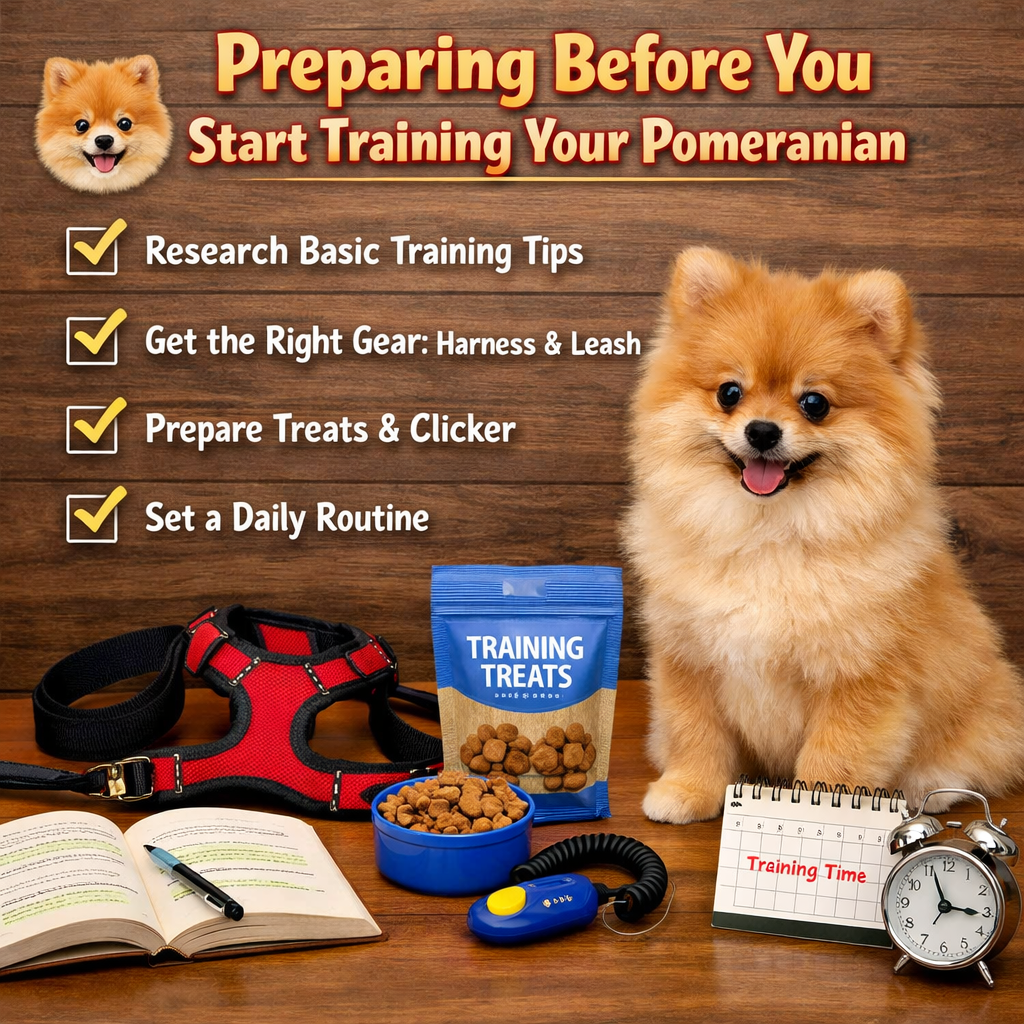
Before you start training your Pomeranian, you need to properly prepare. Many first-time owners make the mistake of jumping right into training without setting up the proper environment, tools and routine. Preparation is key to making training easier, as well as making your dog feel safe, comfortable, and ready to learn.
The first step is to gather the necessary training supplies. You don’t need anything fancy but a few basics will help. This includes a comfortable crate, leash and harness (better than a collar for small dogs), training treats, puppy pads (if you plan indoor potty training), and possibly a clicker for positive reinforcement training. High quality treats are especially important as Pomeranians tend to respond very well to rewards.
Then you need to create a safe and structured environment. Choose a quiet spot in your home with little distraction. Pomeranians are easily distracted by noise and movement so it is best to start out in a quiet environment so that they can concentrate. If you’re going the crate route, make sure it’s cosy, not too big, just enough room for your dog to stand, turn and lie down comfortably. The crate should be a safe place, not a punishment.
One of the most important steps in preparing is setting up a regular daily routine. Dogs love routine, because it gives them a sense of what’s going to happen next. Feed, potty, play, and training sessions at regular times. For instance, take your Pomeranian outside (or to a puppy pad) in the morning, after meals, and before bedtime. Consistent timing speeds up potty training and decreases accidents.
Realistic expectations are another important consideration. Pomeranians are intelligent but they may be stubborn so don’t expect to see progress immediately. Training requires patience, repetition and a positive attitude. Short training sessions of about 5 to 10 minutes are more effective than longer ones, especially for small dogs with shorter attention spans.
You also want to establish simple rules and boundaries from the get-go. Determine where your dog can go, where they will sleep and what behaviours are acceptable. For example, if you don’t want your Pomeranian on the furniture, don’t allow him on the furniture from the beginning. This can cause confusion for your dog and they can learn slower because of inconsistency.
Finally, get a grip mentally . Training isn’t just about the dog, it’s about the owner too for successful training. Stay calm, avoid punishment and focus on positive reinforcement. Celebrate the small victories, like your dog responding to their name or sitting on command. These initial successes increase confidence for you and your Pomeranian.
To sum it all up, preparation before training is about having the right tools, a structured environment and a consistent routine. Proper preparation lays a solid foundation that makes training your Pomeranian easier, faster and more fun.
Basic Training Principles for a Pomeranian
Before we dive into specific commands or techniques it is important to understand the basic principles of dog training. These key principles will drive everything you teach your Pomeranian, and help long-term success. For new owners, mastering these basics can make training easier, faster and more fun.
And the first rule is positive reinforcement. This means rewarding your Pomeranian when they display the desired behaviour. Rewards could be treats, praise, toys or affection. For instance, reward your dog immediately when they sit on command so they associate the action with something positive. This method works especially well since Pomeranians are very reward-responsive. Avoid using punishment-based training because it creates fear and destroys the bond you have with your dog.
Another basic rule is consistency. It’s important to use the same commands, tone of voice and rules each time as dogs learn by repetition. For example, if you say “sit” don’t start saying “sit down” later on, as this can confuse your dog. Consistency is also important for household rules, so everyone in the home is on the same page about what the guidelines are.
Timing is key in training. Rewards should be given immediately after the desired behaviour – within a few seconds – so your Pomeranian knows exactly what they did right. If you wait, your dog may not connect the reward with the behaviour you’re trying to reinforce.
Keep training sessions fun and short. Pomeranians are easily distracted so training sessions should last between 5 and 10 minutes. The more, shorter sessions you do throughout the day, the more effective it is than doing one long session. End on a positive note and your dog will anticipate the next training session.
Another important thing is patience. Training doesn’t happen overnight and every dog learns at a different speed. Your Pomeranian may learn one command quickly but may struggle with another one. Stay calm and try your best not to get frustrated – your mood will directly affect your dog’s actions. If you get stressed or angry then your dog may get anxious or uncooperative.
Practice and repetition are also important. Dogs learn by repetition, so the more they practise the more they learn. For example, practicing the “sit” command every day in different environments will help your dog understand that the command is valid everywhere and not just at home.
Lastly, make sure to concentrate on building a strong bond with your Pomeranian. Training is not just about obedience – it’s about communication and trust. Spend quality time playing, interacting and rewarding your dog. A good relationship will make your Pomeranian more willing to listen and learn.
In conclusion, successful training is dependent on positive reinforcement, consistency, timing, patience, and repetition. Following these principles will help you create a supportive learning environment that will help your Pomeranian become a well-behaved and happy companion.
Potty Training Your Pomeranian
Potty training is one of the first and most important steps when raising a Pomeranian and especially for first-time owners. Pomeranians are small, with a fast metabolism, which means they have to relieve themselves more often than bigger dogs. With the right approach, consistency and patience, you can successfully house train your puppy and avoid unwanted accidents.
The first step in potty training is to create a regular routine. Bring your Pomeranian to his designated potty spot at key times of the day like first thing in the morning, after meals, after naps, and before bedtime. In the early days, frequent trips are necessary because puppies generally need to go every 2-3 hours. Consistency helps your dog learn when and where it is acceptable to eliminate.
Then select a designated potty spot. This can be done outside (grass area) or inside using puppy training pads. Take your dog to the same spot each time so they associate that area with bathroom behaviour. Eventually, your Pomeranian will learn to go to that spot naturally when they need to relieve themselves.
Crate training is a powerful potty training tool. Dogs have a natural tendency to avoid soiling their sleeping area, so a crate that is the right size will encourage them to hold their bladder. Make sure the crate is not too large, just big enough for your Pomeranian to stand up, turn around and lay down comfortably. The crate can also be used to prevent accidents when you can’t supervise your dog.
One of the most effective ways is positive reinforcement. Reward your Pomeranian with treats, praise, or affection whenever they go potty in the right spot. Timing is everything – reward them immediately after they finish so they know what they did right. This creates a strong positive association with good behavior.”
Accidents are going to occur, especially at first. The trick is to treat them right. Never reprimand your dog for accidents, as this can lead to fear and confusion. Instead, clean the area thoroughly to eliminate odours and discourage repeat behaviour. If you catch your dog doing it, gently interrupt and take them to the right place.
Watch for signs that your Pomeranian needs to relieve himself. Common signals include sniffing the floor, circling, whining or suddenly being restless. By noticing these signs early, you can quickly take your dog to the potty area and prevent accidents.
As your Pomeranian gets better you can start to cut down on the potty breaks and make them more independent. But keeping a routine is still important for long-term success.
In conclusion, potty training your Pomeranian requires consistency, patience and positive reinforcement. You can successfully teach your dog where and when to go by establishing a routine, using the right tools like crates and training pads, and rewarding good behaviour. This will give a solid foundation for all future training.
Teaching Basic Commands to a Pomeranian
Basic commands are an important part of training your Pomeranian. These commands help to improve obedience, keep your dog safe and well-behaved in different situations. For new owners, starting with basic commands such as sit, stay, come, and down will give you a solid foundation to build on for further down the road.
Most owners teach the “sit” command first. It is one of the easiest and most useful commands. Bring a treat close to your Pomeranian’s nose and slowly move your hand up. Their bottom will naturally lower to the ground as their head follows the treat. When they sit, say “sit” clearly and reward immediately. Repeat a few times without the treat motion until your dog gets the idea.
The next command is the “stay,” which teaches your dog patience and control. First, get your Pomeranian to sit. Then hold up your hand like a stop sign and say “stay.” Take a little step back. If they stay in place, reward the dog. Slowly increase the distance and time over time. Thiscommand is particularly handy to keep your dog from getting into dangerous situations.
The “come” command is essential for safety. It ensures your Pomeranian will return to you when you call him. Begin with a quiet place, no distractions. Call your dog’s name in a happy tone and say “come.” Gently encourage your dog to come to you. Reward at treat and praise when they come. Always make this a positive experience so your dog learns to associate coming to you with something enjoyable.
Another useful command is “down” which teaches your dog to lie down calmly. Start with your dog sitting. Hold a treat and move it slowly to the floor. Your Pomeranian will lower its body into a lying position as it follows the treat. Say “down” and reward them when they do the action.
Practice these commands in short, consistent sessions, lasting about 5 to 10 minutes each. Pomeranians have short attention spans so multiple short sessions throughout the day are more effective than long ones. End your training session on a positive note to keep your dog motivated.
Use treats carefully. Small, soft treats are best because they are easy to eat quickly so you can continue training without interruption. As time goes on you can reduce the treats and replace them with praise or play.
In summary, teaching basic commands is a matter of clear communication, consistency and positive reinforcement. With patience and regular practice, your Pomeranian will soon learn to follow commands and turn him into a well-behaved and confident companion.
Managing Barking and Behavior Issues of the Pomeranian
The Pomeranian is a lively breed, and this can sometimes lead to behavioural challenges such as excessive barking, nipping, or separation anxiety. For first-time owners, learning how to manage these behaviours early is key to raising a well-balanced and calm dog.
Excessive barking is one of the most common problems. Pomeranians are naturally alert and will bark at strange sounds, strangers or even boredom. Barking is normal but, if not controlled, it can become excessive. Find the cause, that’s the first step. Is your dog barking because he wants attention, is scared, or is not getting enough stimulation? Once you know what the trigger is, you can work on it. Teach a “quiet” command by letting your dog bark a few times, then calmly saying “quiet” and rewarding your dog when they stop. The point is to be consistent with this command.
Nipping or biting is another common behaviour, especially in puppies. This generally happens while playing or teething. It may seem harmless, but it’s important to correct it early. If your Pomeranian nips, cease play and ignore them for a brief period. This teaches them biting = no fun. Redirect their attention to appropriate chew toys to satisfy their natural urge to bite.
Another problem a lot of Pomeranian owners have to deal with is separation anxiety. These dogs form strong attachments to their owners and can be anxious when left alone. The signs can be barking, whining, destructive behaviour or pacing. To prevent this, slowly condition your dog to enjoy being alone. Start by leaving them alone for short periods and gradually increase the length of time. Give them toys or treats to keep them busy and don’t make a big fuss when you leave or come home.
Attention seeking behaviours such as jumping, whining or barking may also be seen in Pomeranians. It is important not to inadvertently reinforce these behaviours. If you reward your dog with attention when he barks he will learn that barking works. Instead, ignore the behaviour and reinforce calmness.
Mental and physical stimulation is another important factor in managing behaviour. A bored Pomeranian is more prone to pick up bad habits. Playtime daily, short walks, interactive toys can help burn off some excess energy and keep your dog engaged.
Correcting behaviour problems takes patience and consistency. Don’t punish – punishment can instill fear and make the problem worse. Instead, concentrate on positive reinforcement — rewarding good behaviour, but calmly redirecting unwanted actions.
In summary, to deal with barking and behavioural issues, it is important to understand your Pomeranian’s needs and triggers and to respond with consistent training. With time, patience and the right approach, you can help your dog to learn to be calm and positive, making life more enjoyable for both of you.
Socialization Tips for Pomeranians
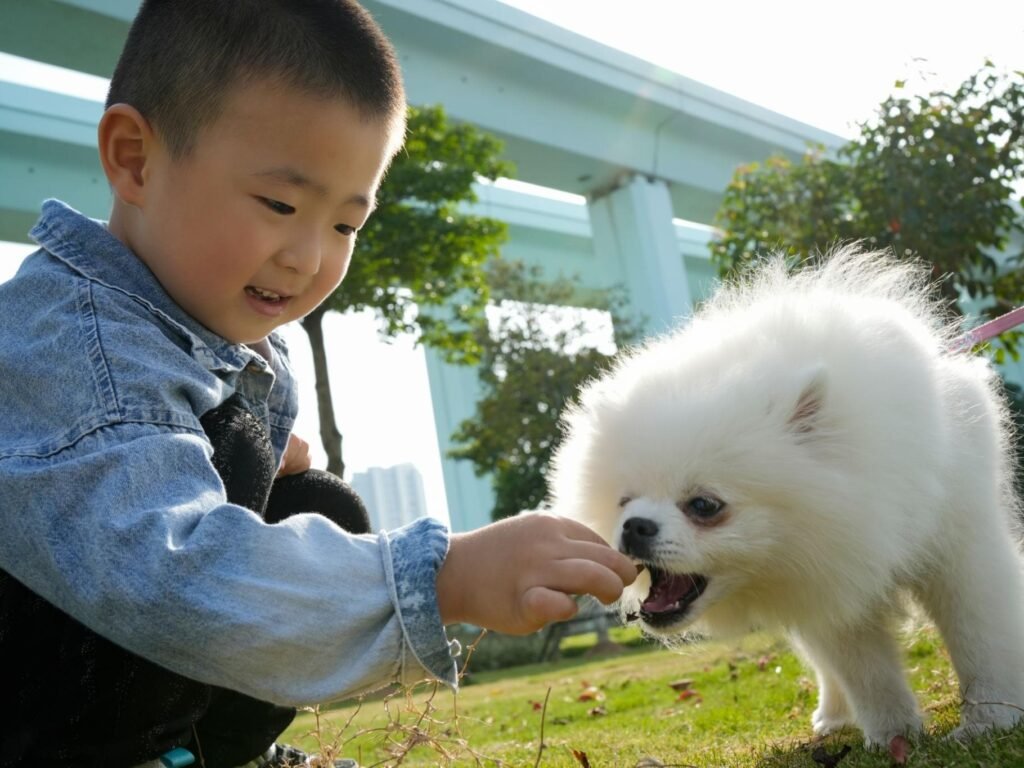
Socialisation is a very important part of raising a well-behaved and confident Pomeranian. It involves introducing your dog to different people, animals, environments and experiences in a positive and controlled way. First-time owners benefit from early socialisation that helps prevent fear, aggression and anxiety later in life.
The best time to start socialising your Pomeranian is during the puppy stage, typically between 8 and 16 weeks of age. Throughout this period, puppies are more receptive to novel experiences and less likely to develop fear-based responses. But you can socialise older dogs, it just takes patience and gradual exposure.
Get your Pomeranian used to different kinds of people. This includes men, women, children, and those in hats, glasses, or uniforms. Keep these interactions positive and calm. Allow your dog to approach at their own pace and reward them with treats and praise when they react calmly. Don’t force interactions, it can cause fear.
Next, work on socialising with other dogs. Begin with relaxed, friendly dogs in a controlled setting. Pomeranians do best in small groups or one-on-one introductions due to their size. Always supervise interactions and watch for signs of stress or discomfort such as growling or backing away. Good social skills and less territorial behaviour in your Pomeranian come from positive experiences with other dogs.
Exposure to different environments is just as important. Take your Pomeranian to parks, sidewalks, pet-friendly shops or peaceful public areas. Let them listen to different sounds such as traffic, doors or household appliances. Start in low distraction environments and gradually increase the complexity of the environment as your dog gets more comfortable.
Socialisation also involves handling and grooming. Make your Pomeranian accustomed to being touched on their paws, ears and mouth. This makes future grooming, vet visits, and nail trimming much easier. Pair these experiences with treats to establish positive associations.
Another important tip is to keep socialisation sessions short and positive . Too many new things at once can overwhelm your dog and cause stress. No, introduce new situations slowly, and always finish on a positive.
Also helpful is the use of positive reinforcement during socialisation. Reward calm and confident behaviour with treats, praise or play. This teaches your Pomeranian that new experiences are safe and fun.
Try to avoid bad experiences at this stage. One bad experience, like being scared of a bigger dog, can lead to a long-lasting fear. Always make your dog feel safe and supported.
To sum up, socialisation helps your Pomeranian to be confident, friendly, and well-adjusted. Introducing them to new people, animals and environments in a positive way reduces the risk of behaviour problems and makes for a more enjoyable experience for you and your dog.
Leash Training and Outdoor Behavior Of Pomeranian
Leash training is a must-have skill for all Pomeranians, especially first-time owners. Pomeranians are small, but they still need regular walks for exercise, mental stimulation and socialisation. Teaching your dog to walk calmly on a leash will make outdoor time safer and more enjoyable for you both.
Step 1: Pick the right equipment. Pomeranians need a harness instead of a collar to avoid injury and protect their delicate neck. Pair the harness with a light leash that allows you to remain in control, but doesn’t overpower your dog.
Start leash training indoors or in a quiet place with little distraction. Let your Pomeranian wear the harness for a short period of time to get him used to it. When they are calm, put the leash on and let them walk. This helps them get used to the sensation before they go out.
Begin walking with a loose, relaxed leash. Do not pull forward on your dog as this can create resistance or fear. Instead, use treats or a cheerful voice to encourage your Pomeranian to follow you. Reward immediately if your dog is walking beside you without pulling. This reinforces good leash manners.
If your Pomeranian starts to pull on the leash, just stop walking. Stand still and wait until the leash loosens again. When your dog comes back to you, keep walking and reward. This teaches your dog that pulling won’t get them where they want to go, but calm walking will.
The outdoors can be full of distractions like other dogs, people, or noises. It’s important to get your Pomeranian used to these situations slowly. Start in quiet streets or areas with low traffic, and slowly introduce your dog to more stimulating environments as they gain confidence. Reward calm behaviour whenever your dog ignores distractions.
This is especially important for small dogs such as Pomeranians. Watch out for large dogs, busy roads and severe weather. In crowded places keep your dog close to you. Avoid situations that may overawe or frighten them.
Leash training also improves overall outdoor behaviour. Teaching your dog commands such as “heel” or “let’s go” can help you to steer your dog while on the walk. By practicing these commands on a regular basis, you will be able to have more controlled and enjoyable walks.
Be consistent and patient. Some days your Pomeranian will walk perfectly, and other days they may be distracted or stubborn. Remain calm and keep reinforcing positive behaviour.
To conclude, leash training is a skill that will teach you how to walk your Pomeranian safely, confidently, and, most importantly, calmly at your side. With the right gear, regular training and encouragement, your dog will soon learn to walk well and outdoor adventures will be a positive experience for both of you!
Training Schedule for First-Time Pomeranian Owners
One of the most important steps to successfully train your Pomeranian is to establish a consistent training schedule. Dogs love routine and a set daily plan helps your puppy know what to expect. Having a clear schedule makes training easier for first-time owners, and avoids confusion for you and your dog.
Start your day by scheduling important activities such as feeding, bathroom breaks, playtime and training. A day in the life of your Pomeranian might look like this: potty time in the morning, then feeding, then a little training. Repeat this cycle, with regular potty breaks, short training sessions and playtime throughout the day.
Training is best short and often. Pomeranians have a short attention span, so sessions should be around 5 to 10 minutes. Instead of one long session, go for 2-4 short sessions throughout the day. This will keep your dog entertained, avoiding boredom and frustration.
The timing has to be consistent. Try to teach your Pomeranian at the same time every day. For example, you could train in the morning, afternoon, and evening. This routine helps your dog to mentally prepare for training and improves learning efficiency.
It needs to happen organically through the day, in addition to structured sessions. Ask your dog to “sit” before meals, “stay” before opening the door, or “come” during playtime, for example. These small moments reinforce training in real life situations and help your Pomeranian understand that commands apply everywhere.
Another useful strategy is tracking progress. Make a simple record of what commands your dog has learned and what needs improvement. It can be as simple as writing down progress in your phone or notebook. Tracking helps you stay on track and adjust your training plan if needed.
It’s also important to balance training, rest and play. Puppies especially need lots of sleep to process what they have learned. Don’t overtrain, you can get stressed out or lose interest. Always finish training sessions positively with praise or playtime.
As your Pomeranian grows and improves, you can start to increase the level of training. This might mean longer “stay” commands, more distractions, or learning new tricks. But even as your dog progresses, it’s still important to have a routine.
To summarise, a good training schedule provides regularity, helps to form good habits and accelerates learning. To train your Pomeranian in a fun and stress-free way, combine short sessions with daily routines and real-life practice.
Common Mistakes to Avoid For Pomeranians
If you are a first time owner, it is very easy to make mistakes when training a Pomeranian that can slow down your progress or confuse your dog. Knowing these common mistakes will help you avoid setbacks and develop a more effective training routine.
Inconsistency is one of the biggest mistakes. Dogs learn by repetition so if you change commands, rules or expectations your Pomeranian may get confused. For instance, letting your dog on the couch one day but not the next sends mixed signals. To keep things simple, all household members should use the same commands and enforce the same rules.
Another common problem is overusing treats. Treats are a great training tool, but too many can lead to dependency or weight gain. Your dog might only respond when food is present. To avoid this, slowly wean off the treats over time, and use praise, toys, or affection as rewards instead.
Another common mistake owners make is using punishment-based training. Shouting, hitting or scolding your Pomeranian can create fear and damage your relationship. Instead your dog may become anxious or avoid you and not learn what to do. Positive reinforcement is always more effective and builds trust.
Another major challenge is lack of patience. Training can be time-consuming and progress may not always be immediate. You will be frustrated if you expect your Pomeranian to learn commands quickly. The key is to stay calm and realise that every dog learns at their own pace.
Some owners accidentally reinforce bad behaviour. If your dog barks for attention and you pick them up or talk to them, for example, you are teaching them that barking gets results. Instead, disregard unwanted behaviour, and reward calmness.
Another mistake is training sessions that are too lengthy. Pomeranians have short attention spans and long sessions can lead to boredom and a reduced focus. Much shorter and more stimulating sessions are far more effective.
Also, neglecting mental and physical stimulation can lead to behaviour problems. A bored Pomeranian may bark excessively, chew furniture or become hyperactive. To keep your dog balanced and happy, regular playtime, walks and interactive toys are a must.
Finally, many owners do not socialise their dogs early which can lead to fear or aggression later on. These issues can be prevented when you expose your Pomeranian to different people, pets, and environments early.
In summary, common mistakes like lack of consistency, overfeeding treats, punishment, and lack of patience will go a long way in improving your success with training. Being consistent, positive and attentive to your dog’s needs will help you to make a smooth and rewarding training experience.
Advanced Training Tips For Pomeranian
Once your Pomeranian has mastered basic commands and routines, you can move on to more advanced training. This stage focuses on improving obedience, teaching fun tricks, and providing mental stimulation. Advanced training not only keeps your dog engaged but also strengthens your bond and prevents boredom-related behavior issues.
One of the best ways to advance training is by teaching fun tricks. Pomeranians are intelligent and enjoy learning new things. Tricks like “spin,” “shake hands,” “high five,” or “roll over” are great for mental stimulation and entertainment. Start by breaking each trick into small steps and use treats or praise to reward progress. Keep sessions fun and positive so your dog stays motivated.
Another important area is improving obedience with distractions. While your Pomeranian may respond well at home, real-life situations often include distractions like people, other dogs, or noise. Practice commands like “sit,” “stay,” and “come” in different environments, gradually increasing the level of distraction. This helps your dog learn to listen to you no matter the situation.
Mental stimulation is just as important as physical exercise. Pomeranians can become bored quickly, which may lead to unwanted behaviors. Puzzle toys, treat-dispensing toys, and interactive games are excellent ways to challenge your dog’s mind. You can also create simple games at home, like hiding treats and encouraging your dog to find them.
You can also introduce agility-style activities. Even though Pomeranians are small, they are energetic and capable of learning basic obstacle courses. Simple setups like tunnels, small jumps, or weaving through objects can provide both physical and mental exercise. These activities are especially useful for keeping your dog active indoors.
Another advanced technique is off-leash training (in safe, enclosed areas). This builds trust and improves recall. Start in a secure environment and practice the “come” command consistently. Always reward your dog for returning to you, making it a positive experience.
As your dog progresses, focus on reducing reliance on treats. While treats are useful in early training, advanced training should include more verbal praise, affection, and play as rewards. This ensures your Pomeranian responds to commands even without food.
It’s also important to continue reinforcing good behavior daily. Training doesn’t stop once your dog learns commands—it’s an ongoing process. Regular practice helps maintain skills and prevents regression.
Once your Pomeranian has learned the basics such as commands and routines, you can begin training for more advanced commands. This stage is about bettering obedience, fun tricks and mental stimulation. Advanced training keeps your dog engaged, strengthens your bond and prevents boredom-related behaviour issues.
One of the best ways to advance training is teaching fun tricks. Pomeranians are smart and love learning new tricks. Tricks such as “spin,” “shake hands,” “high five,” or “roll over” are great for mental stimulation and fun. Break each trick into small steps and use treats or praise to reward progress. Keep the sessions fun and positive so your dog stays motivated.
Another major area is obedience with distractions. Your Pomeranian might do well at home but real life situations often have distractions like people, other dogs, or noise. Practice commands like “sit,” “stay,” and “come” in different environments, slowly increasing the level of distraction. This teaches your dog to listen to you at all times.
Mental stimulation is as important as physical exercise. Pomeranians get bored easily and that can lead to unwanted behaviours. Interactive games, puzzle toys, and treat-dispensing toys are wonderful ways to challenge your dog’s mind. You can also play simple games at home, like hiding treats and encouraging your dog to find them.
You can also add activities in the style of agility. Small but energetic, Pomeranians can learn basic obstacle courses. Simple setups like tunnels, small jumps or weaving through objects can provide both physical and mental exercise. These activities are especially good for keeping your dog moving indoors.
Off-leash training (in safe, enclosed areas) is another advanced technique. This engenders trust and improves recall. Start in a safe environment and practise “come” consistently. Always reward your dog for coming back to you, so it is a positive experience.
As your dog progresses, work on reducing treats. Treats are helpful in early training, but advanced training needs more verbal praise, affection and play as rewards. This makes sure your Pomeranian responds to commands even without food.
It’s also important to keep reinforcing good behaviour daily. Training is not a one-time event, it does not end when your dog learns the commands. It is an ongoing process. Regular practice keeps skills up and avoids regression.
Finally, have fun and make it interesting throughout the training. They may not be interested if your Pomeranian gets bored or frustrated. Change things up, have fun and celebrate the wins.
To sum up advanced training is an evolution of the basics, adding complexity, variety and real-world application. Teaching tricks, improving focus and providing mental stimulation helps your Pomeranian become a smarter, happier, more well-rounded companion.
Pomeranian Recommended Training Tools (USA)
With the right tools, training your Pomeranian can be a lot easier and more effective. In the US there are many good quality products for first time owners that promote positive reinforcement training and good habits from day one.
Training treats are one of the most important tools. Because Pomeranians respond very well to rewards, it is essential to have small, soft and tasty treats. Look for training-specific treats – these are usually low in calories and easy to chew quickly so you can keep training without missing a beat. In the U.S., natural, grain-free treats that are healthy and appealing to small dogs are popular options.
Another must-have tool is a crate, especially for potty training and creating a safe space. Pick a crate that is the right size for your Pomeranian – big enough for them to stand and turn around in, but not large enough for them to use one corner as a bathroom. Many owners in the U.S. like wire crates that come with adjustable dividers so they can grow with your puppy. A cosy bed or blanket will make the crate more appealing.
Puppy training pads are very helpful for indoor potty training especially for apartment living or cold weather conditions. Absorbent pads are high-quality and help contain messes while making cleanup easier. Some brands also feature odour control to help keep your home smelling fresh.
A clicker is a simple, yet powerful, positive reinforcement training tool. It makes a distinct sound that marks the exact instant your dog does the correct thing. This helps your Pomeranian know precisely what they did right. Clicker training is popular in the United States and is especially effective to train commands and tricks.
A harness and leash are a must for walking. For small breeds like Pomeranians, a harness is safer than a collar, as it takes the strain off their necks. Select a lightweight adjustable harness that will fit well and not restrict movement.
Interactive toys and puzzle feeders are also something to consider. These tools keep your pet’s mind busy and help to prevent boredom, which can lead to unwanted behaviours such as barking or chewing. Puzzle toys give your dog mental stimulation and make them work for their treats – they are both fun and good for your dog.
Finally, a treat pouch or training bag can be very handy. This product lets you carry treats easily during training sessions or walks, so you’re always ready to reward good behaviour.
To sum up, the right training tools (such as treats, crates, pads, clickers, and harnesses) can greatly improve your training experience. When you buy quality products that are available in the U.S., you’re setting your Pomeranian up for success and making the training process easier and more fun.
When to Seek Professional Help for a Pomeranian
While many Pomeranian owners can train their dogs at home, there are times when professional help is best. Knowing when you need that extra support as a first-time owner can save you time, stress, and help your dog grow up with healthy behaviour.
One big reason to consider a professional trainer is if you have persistent behaviour problems. When your Pomeranian repeats a bad behaviour such as excessive barking, aggression, biting, or ignoring commands despite consistent training, it’s time to call in a professional who can find the root cause and offer targeted solutions. These behaviours are sometimes related to anxiety or fear, which need specific handling.
A further sign is little or no progress in training. If you have been training consistently and are not seeing improvement in your dog, it may be that you are using the wrong techniques, you are inconsistent, or you don’t understand what your dog needs. A pro trainer can assess how you’re doing and tweak your training plan for better outcome.
Professional help can also be beneficial for first-time dog owners who are feeling overwhelmed or unsure. Learning proper training techniques from the beginning can help avoid problems later on and build confidence. “Trainers can teach you how to talk to your Pomeranian to get good habits going early.
In the US, there are different types of training options available. Group training classes are a popular and affordable option. The classes enable your Pomeranian to learn basic commands, as well as socialise with other dogs. They are great for practicing obedience and building confidence in a controlled environment.
If you want more attention to yourself, private training sessions are a great option. In private sessions, a trainer works one-on-one with you and your dog to address specific issues or goals. This is especially useful in dealing with behaviour problems such as aggression or separation anxiety.
If your Pomeranian has more serious issues, you may also want to consider working with a certified dog behaviourist. Behavioural specialists study the emotional and psychological reasons for behaviour and can develop specific plans to deal with them.
Find a trainer in the US that uses positive reinforcement methods. Stay away from trainers who use punishment or heavy-handed techniques as this can be harmful to your dog’s well being. You can locate a dependable professional by perusing reviews, verifying certifications and soliciting referrals.
Consider cost too. Group classes are usually cheaper, while private sessions can be more expensive but deliver faster, more targeted results. Think of it as an investment in your dog’s long-term behaviour and happiness.
To sum up, when you get into trouble that is beyond your experience, it is a good idea to find some professional help. The right trainer can help you get past hurdles, improve your dog’s behaviour, and build a stronger, more positive relationship with your Pomeranian.
Conclusion
Being a first time owner, training a Pomeranian may seem hard at the start but with the right approach it can be a rewarding and fun experience. They are small, smart dogs with lots of personality who, with the right guidance, can become well-behaved, confident and loving companions. Understanding their behaviour, remaining consistent, and using positive reinforcement throughout the training process are keys to success.
From basic commands, to potty training, to behaviour issues and socialisation, each step is an important part of your Pomeranian’s development. Establishing a consistent routine, offering mental engagement, and steering clear of common pitfalls will help you build a strong foundation for lasting success. As a reminder, training is not a one and done type of deal. It’s a journey that takes patience, practice and dedication.
It’s also important to know that every dog learns at a different rate. Some Pomeranians may pick up on commands quickly, while others may take more time and repetition. Have patience, enjoy the little victories and always work to build trust and communication with your dog.
If you ever feel like you are stuck, don’t hesitate to get help from a professional. And with the right support and tools, you can overcome challenges and keep moving forward.
Training is more than obedience. It’s about creating a strong bond and a happy life together. With commitment and persistence, your Pomeranian will grow into a well-trained companion that will bring joy and companionship for years to come.